How Multi-Factor Authentication Shapes Access to Tiered Live Dealer Tournaments Across Portable Platforms
Anna Werner · Jul 6, 2026

How Multi-Factor Authentication Shapes Access to Tiered Live Dealer Tournaments Across Portable Platforms
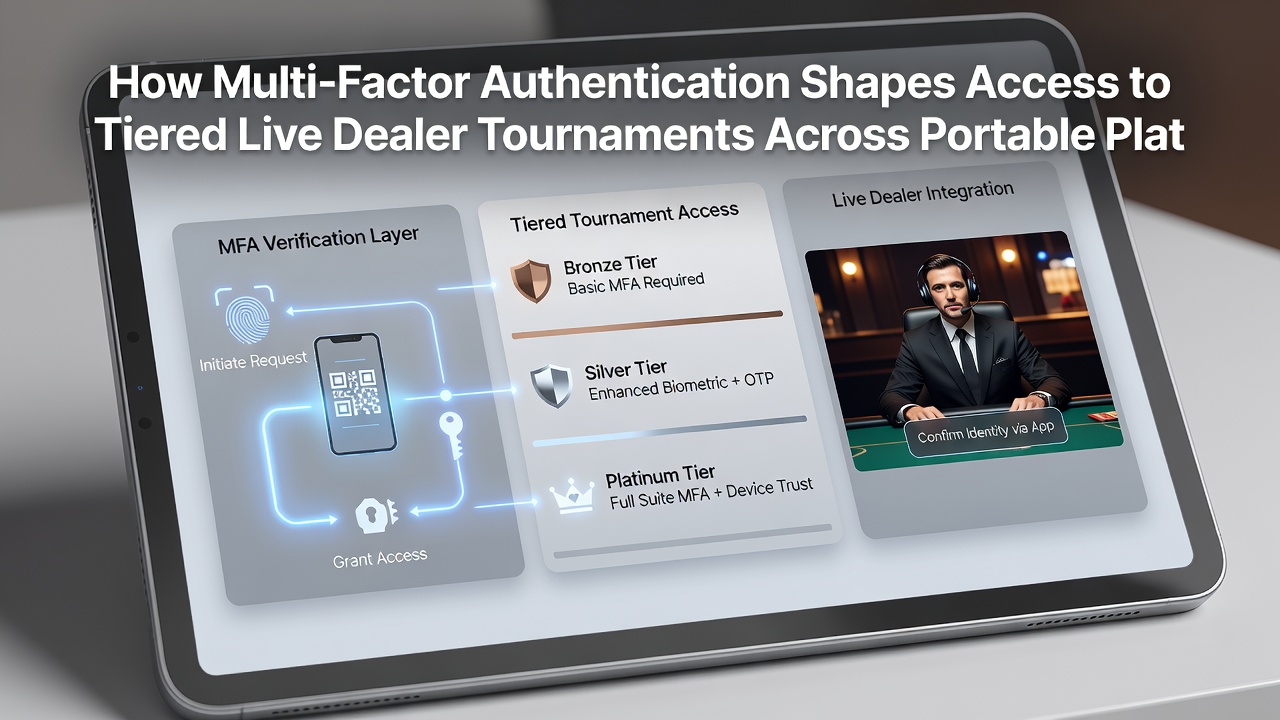
Multi-factor authentication has become a central element in controlling entry to tiered live dealer tournaments on mobile devices, where layered verification steps determine which players gain access to progressively exclusive events. Operators implement these protocols to align security requirements with membership levels, creating distinct pathways that separate casual participants from those competing in high-stakes sessions. Data from industry reports shows that portable platforms hosting live dealer formats now integrate at least two additional verification factors beyond standard passwords for users advancing through bronze, silver, and gold tiers.
Research indicates that biometric elements such as fingerprint scans or facial recognition combine with one-time codes sent to registered devices, and this combination directly influences tournament eligibility across iOS and Android environments. Those who study mobile gaming systems note that higher tiers often demand an extra hardware token or location-based check, which restricts participation to verified accounts while maintaining compliance with regional licensing standards. In July 2026 several platforms updated their verification sequences to include device-binding checks, reflecting broader adoption of enhanced protocols in international markets.
Security Layers and Tournament Entry Points
Live dealer tournaments on portable platforms operate through structured membership ladders where each level unlocks specific tables and prize pools, yet multi-factor authentication governs the transition between these stages. Experts observe that initial registration typically requires email confirmation paired with a mobile number, after which players must complete a second factor before entering silver-level events featuring real-time roulette or blackjack formats. Gold-tier access frequently incorporates a third verification step, such as a push notification approval or voice biometric match, which data shows reduces unauthorized entries by measurable margins according to audits from regulatory bodies in multiple jurisdictions.
Platform developers design these systems so that authentication flows adapt to device capabilities, allowing seamless progression on newer smartphones while older models encounter additional manual steps. Studies from gaming research centers reveal that players who complete all required factors early experience fewer interruptions during tournament registration windows, whereas incomplete profiles face automatic deferral until verification completes. This structure maintains integrity across wireless connections where network variability can affect code delivery times.
Platform Variations Across Mobile Ecosystems
Differences emerge between operating systems when multi-factor authentication intersects with tiered tournament structures, since Android environments often support more flexible authenticator apps compared to the stricter app-store guidelines on iOS. Observers note that cross-platform users encounter synchronization challenges when switching devices mid-tournament cycle, prompting operators to offer recovery options tied to account history rather than repeated full verifications. Figures from industry analyses indicate that such adjustments help sustain participation rates in live dealer formats that run continuously across time zones.
Regional operators in Europe and North America have adopted distinct approaches, with some requiring government-issued identification uploads only at the uppermost tiers while others apply uniform standards from the outset. A report issued by the European Gaming and Betting Association highlights how these variations affect player mobility between applications, particularly when tournaments involve shared prize pools across multiple portable platforms. Those tracking user behavior find that streamlined authentication at lower tiers encourages broader initial engagement before stricter checks apply at advanced levels.
Impact on Player Progression and Compliance
Progression through tournament tiers depends heavily on consistent authentication success rates, since failed verification attempts can delay or block access to scheduled events. Researchers at institutions examining digital gaming patterns have documented that platforms incorporating adaptive authentication, which adjusts factor requirements based on risk signals like unusual login locations, achieve higher retention among mobile users. This approach aligns with guidelines from bodies such as the Nevada Gaming Control Board, which emphasize proportional security measures rather than blanket policies.
Portable platforms also integrate authentication logs into their compliance frameworks, allowing operators to demonstrate audit trails during licensing reviews. Data indicates that live dealer tournaments benefit from these records because they verify participant eligibility in real time, reducing disputes over prize distribution. In markets where portable access dominates, such as parts of Asia and Australia, operators have reported that refined multi-factor processes correlate with steadier growth in tiered participation numbers through mid-2026.
Future Adjustments in Verification Protocols
Upcoming modifications to authentication standards will likely refine how tiers interact with mobile tournament access, particularly as new device sensors become standard. Industry organizations project that integration of behavioral analytics, which monitor typing patterns or session habits alongside traditional factors, will further customize entry requirements without adding friction for verified users. These developments build on existing frameworks and address the expanding scale of live dealer events hosted across international portable networks.
Conclusion
Multi-factor authentication continues to define boundaries within tiered live dealer tournaments on portable platforms by enforcing graduated security measures that match membership levels. Evidence from regulatory reports and operational data demonstrates its role in maintaining orderly access while supporting the operational demands of mobile environments. As platforms evolve through 2026 and beyond, these systems will shape participation patterns across diverse device ecosystems and regional markets.