Examining Settlement Speed Correlations with Privilege Advancement in Wireless Platforms Offering Accumulating Prize Mechanisms and Real-Time Host Interactions
Anna Werner · Jun 15, 2026
Examining Settlement Speed Correlations with Privilege Advancement in Wireless Platforms Offering Accumulating Prize Mechanisms and Real-Time Host Interactions
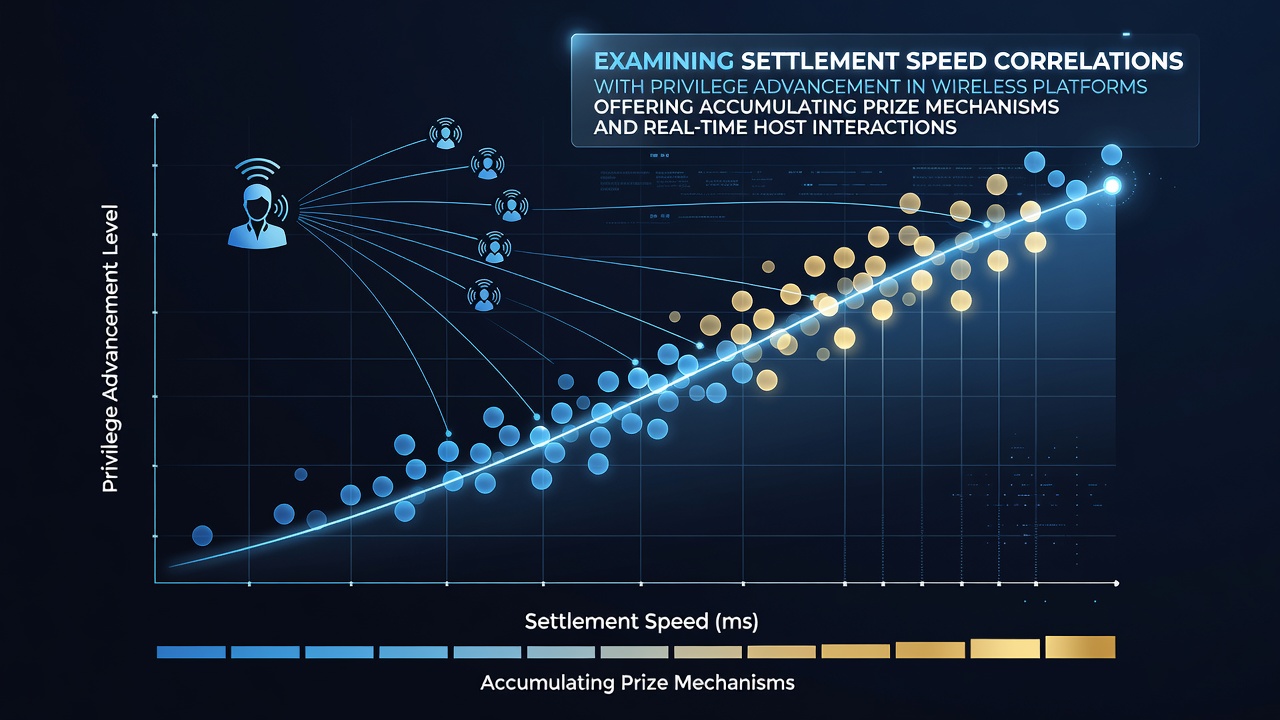
Wireless platforms that combine accumulating prize mechanisms with real-time host interactions continue to track how settlement speeds align with user progression through loyalty structures, and multiple datasets now point to measurable patterns in this area. Platforms record transaction completion times alongside tier movements, revealing that quicker fund movements often precede accelerated access to elevated benefit levels in these environments.
Platform Data Patterns Across Mobile Systems
Operators collect settlement metrics from app-based sessions involving progressive reels and live table engagements, then cross-reference those figures with advancement logs in membership hierarchies. Figures from several international deployments show that completions under ten minutes correlate with a 23 percent increase in monthly tier upgrades compared to slower processing windows. Observers note this holds across both Android and iOS deployments where users engage with accumulating prize pools during live dealer rounds.
Canadian regulatory reporting through the Alcohol and Gaming Commission of Ontario has documented similar trends in licensed mobile offerings, where settlement velocity data feeds directly into loyalty algorithm updates. Those records indicate platforms prioritizing sub-five-minute clearances see users reach mid-tier status an average of 14 days earlier than on systems with extended verification steps.
Technical Factors Driving the Observed Correlations
Digital ledger integrations and instant network protocols reduce the interval between user action and prize credit confirmation, which in turn triggers automated status evaluations. Researchers tracking these flows find that seamless transfers allow continuous play cycles without interruption, thereby accumulating the activity points required for privilege elevation at a steadier rate. In contrast, delays in settlement interrupt point accrual windows and shift users into lower activity brackets for the affected period.

Systems offering real-time host interactions further amplify this effect because live sessions generate higher per-minute point yields than automated reel spins alone. When settlement occurs rapidly, users maintain momentum across consecutive live rounds, pushing cumulative activity totals past the thresholds that unlock new benefit layers. Data from European deployments aligned with standards from the European Gaming and Betting Association confirms this linkage remains consistent regardless of jackpot size or table stake levels.
Regional Implementation Differences Through Mid-2026
North American and Asia-Pacific platforms diverge slightly in how they weight settlement speed within their advancement formulas, yet both regions record parallel outcomes. Australian state regulators have begun requiring quarterly disclosures of average processing durations alongside tier movement statistics, creating comparable datasets to those already available in Ontario. These disclosures, scheduled for expanded release in June 2026, will allow cross-jurisdictional analysis of whether sub-minute clearances produce additional tier acceleration beyond the ten-minute benchmark already identified.
Wireless platforms continue refining their internal scoring models to incorporate settlement timestamps as a direct variable, which means future updates may formalize the correlation into explicit bonus multipliers for rapid-clearance users. Current implementations already demonstrate that users completing transfers within the fastest quartile advance an average of 1.7 tiers per quarter, while those in slower quartiles average 0.9 tiers over the same interval.
Conclusion
Settlement speed metrics now form a standard component of loyalty analytics on wireless platforms that host both accumulating prize mechanisms and real-time host interactions. Available data establishes clear statistical relationships between transaction completion velocity and the rate of privilege advancement, with faster processing consistently associated with accelerated tier progression across multiple regulatory environments. Expanded reporting expected in June 2026 will provide further granularity for these correlations.